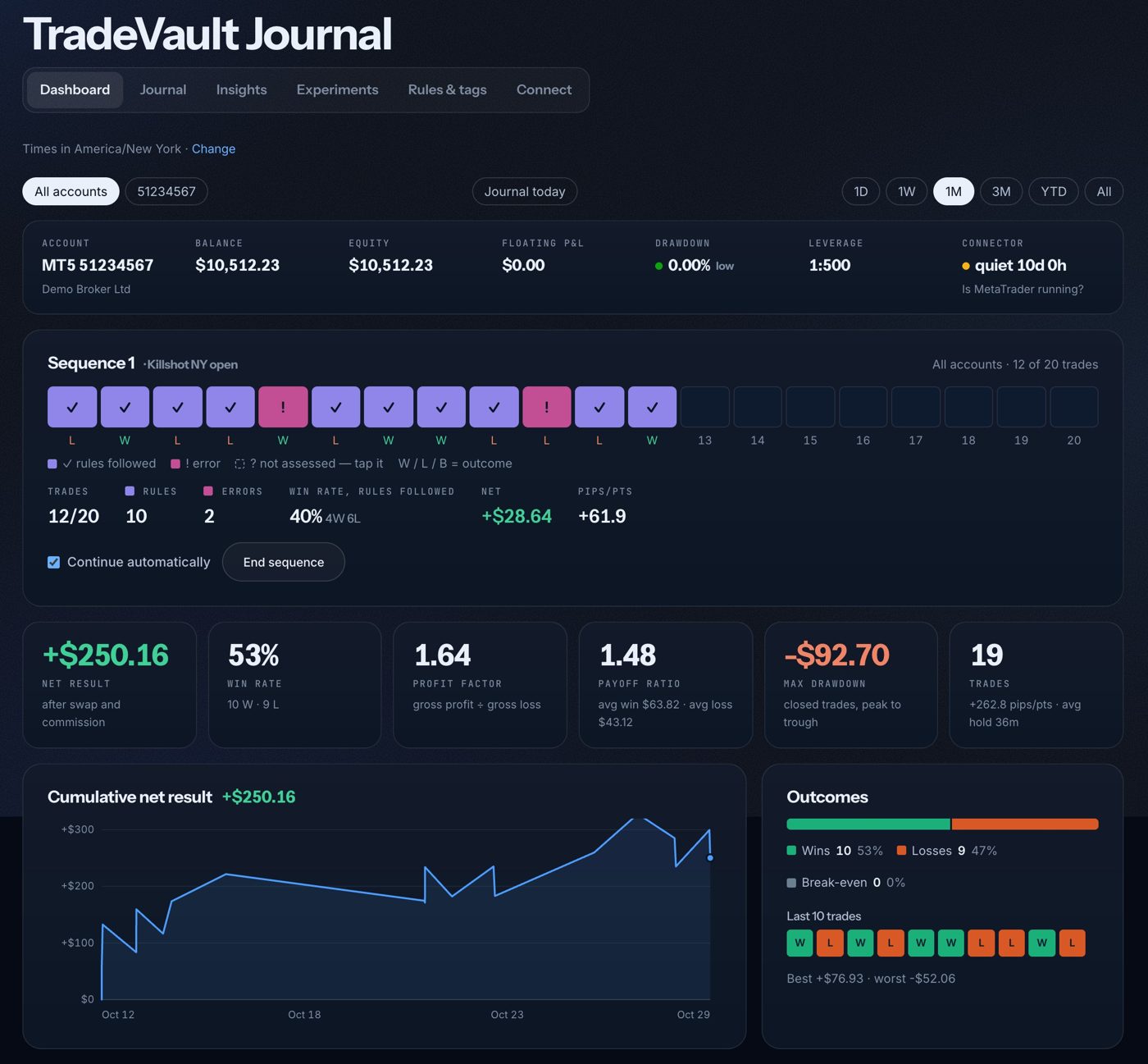
- Revenge trading is trading to recover a loss instead of trading your plan.
- Signs: bigger size after a loss, trades with no setup, moving or removing your stop.
- Fix it with rules decided in advance: a daily loss limit and a stop after two losses.
- Journal how you felt on every trade so you can see the pattern.
What is revenge trading?
Revenge trading is when the reason for a trade stops being your setup and becomes your last loss. You’re not trading the market any more, you’re trading your feelings about it.
It rarely looks dramatic. It’s usually one of these: jumping straight back in without a signal, doubling your size “to make it back quicker”, trading a market or time you don’t normally trade, or pulling your stop because “it has to turn”.
Why it happens
Losses hurt more than equal gains feel good. That imbalance, which psychologists call loss aversion, pushes you to act fast to make the pain stop. Add a fast market like the New York open and the urge to “just get it back” is strong.
The problem is that the trade you take to fix a loss is almost always worse than the one that caused it: less planned, bigger and further from your rules.
Warning signs
- Your next trade comes within minutes of a loss.
- Your size goes up after a loss instead of staying the same.
- You can’t name the rule that triggered the entry.
- You move your stop further away, or remove it.
- You keep trading past the time you planned to stop.
How to stop revenge trading
- Set a daily loss limit before the session, for example 2% or 2R. Hit it and you’re done for the day.
- Stop after two losses in a row. Close the platform, walk away, come back tomorrow.
- Keep your size fixed. Same risk % on every trade, no matter what happened last. A position size calculator makes it automatic.
- Never move your stop away from entry. Only toward it.
- Write down how you felt in your trading journal. Patterns you can’t see in the moment are obvious a week later.
Frequently asked questions
What is revenge trading?
Taking impulsive trades to win back a recent loss, rather than trading your plan. It usually means bigger size, weaker setups and broken stops.
How do I stop revenge trading?
Decide your limits before the session: a daily maximum loss, a stop after two losses in a row, and a fixed risk per trade. Then walk away when you hit them.
Is it normal to want to win back a loss?
Yes, it’s a very human reaction. The goal isn’t to never feel it, it’s to have rules that stop the feeling from placing trades.
Does a trading journal help with revenge trading?
Yes. Recording how you felt on each trade shows you exactly when revenge trading creeps in, and what it costs you.