- Risk-to-reward = distance to your stop compared with distance to your target.
- At 1:2 you only need to win more than 1 in 3 trades to come out ahead, before costs.
- Expectancy (win rate × average win − loss rate × average loss) tells you if a strategy pays over time.
- Set the stop and target before you enter, and don’t move the stop further away.
What is the risk-to-reward ratio?
Every trade has two exits: your stop loss, where you’re wrong, and your target, where you take profit. The risk-to-reward ratio (R:R) compares the two.
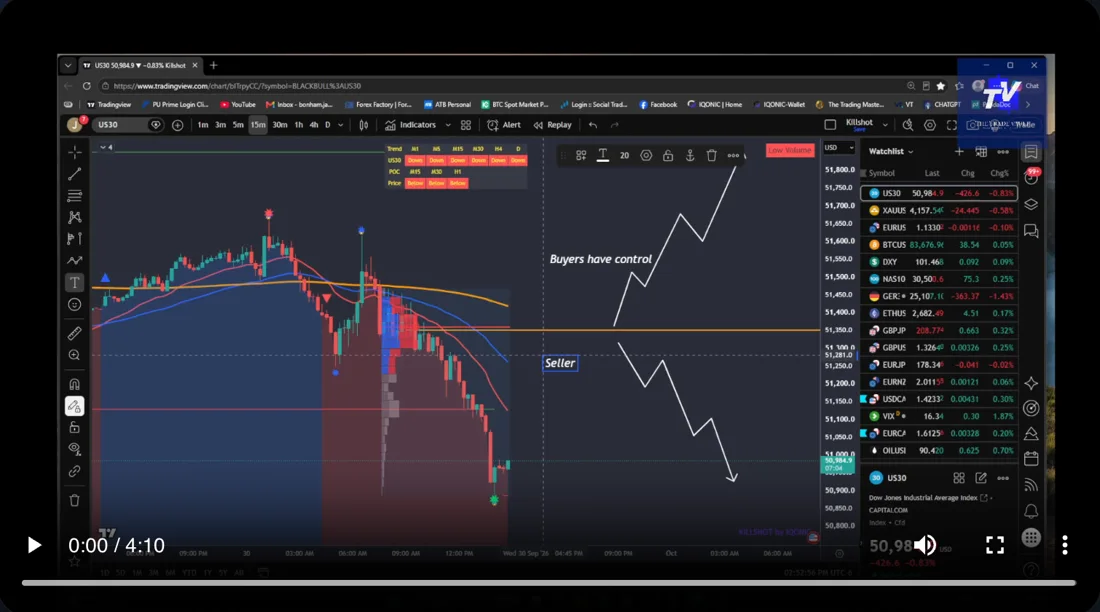
If your stop is 40 points away and your target is 80 points away, you’re risking 40 to make 80. That’s 1:2. Traders often call the amount risked “1R”, so a winner at 1:2 makes 2R and a loser costs 1R.
The win rate you need
Here’s why R:R matters so much. The bigger your reward compared with your risk, the less often you need to be right to break even:
| Risk : reward | Break-even win rate | Out of 10 trades |
|---|---|---|
| 1 : 1 | 50% | 5 winners to break even |
| 1 : 1.5 | 40% | 4 winners |
| 1 : 2 | 33.3% | a little over 3 winners |
| 1 : 3 | 25% | 2.5 winners |
The formula is simple: break-even win rate = 1 ÷ (1 + reward). At 1:2 that’s 1 ÷ 3 = 33.3%. These numbers are before spreads and commission, which push them up slightly.
Expectancy: does your strategy pay?
R:R on its own isn’t enough. A 1:5 trade that only wins 10% of the time still loses money. What you want to know is your expectancy: the average result per trade.
Expectancy (in R) = win rate × average win − loss rate × average loss
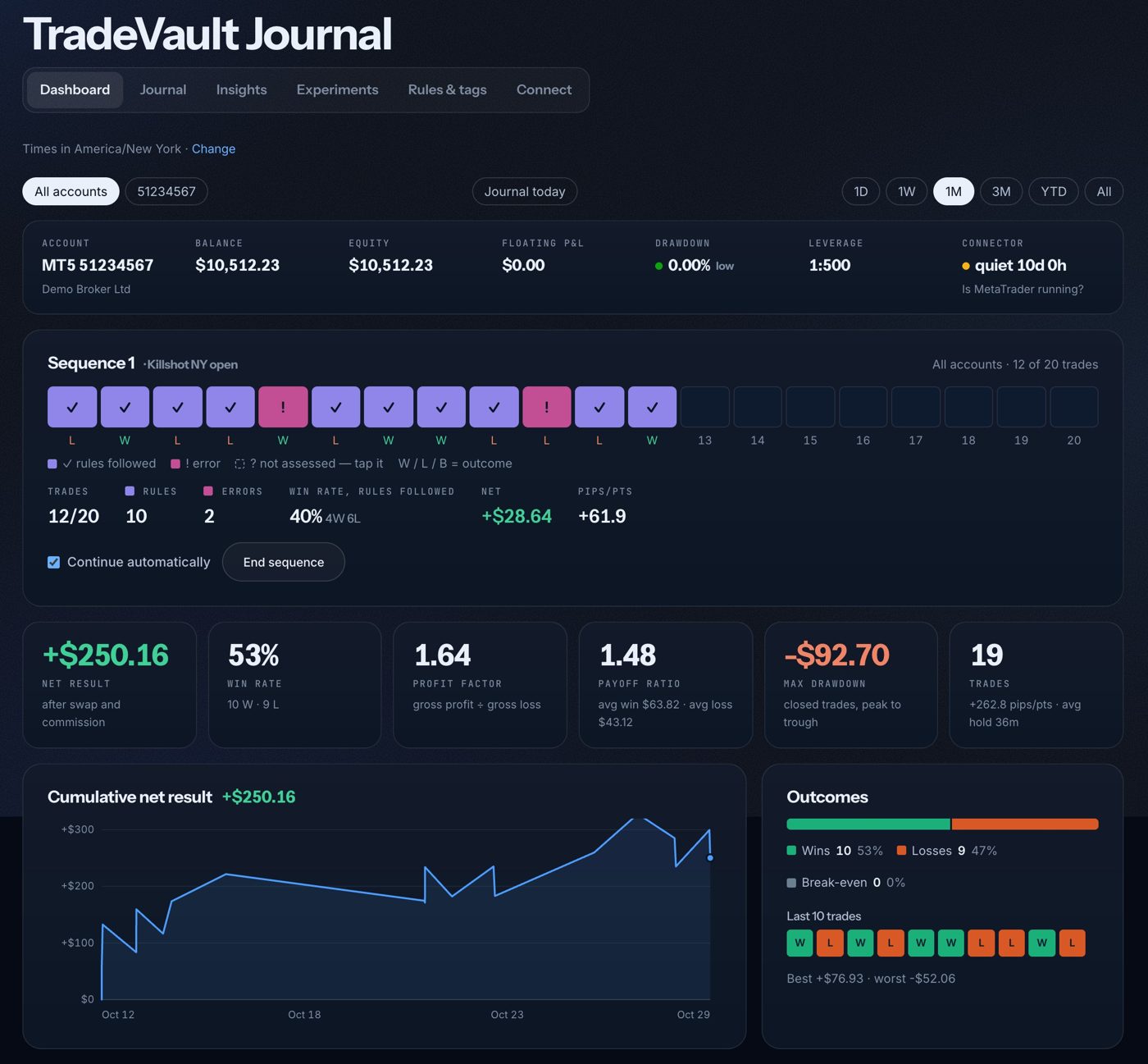
Say you win 45% of trades at 1:2. That’s 0.45 × 2 − 0.55 × 1 = +0.35R per trade on average. Over 100 trades risking $100 each, that’s about $3,500 before costs. Your trading journal is where you get the real win rate to put in here.
Risk-to-reward calculator
Risk-to-reward & expectancy calculator
Before spreads and commission. Expectancy = win rate × reward − loss rate × 1R.
What about inverse risk-to-reward?
Some strategies deliberately use a target smaller than the stop, for example 2:1 risk to reward. That only works with a high, proven win rate (above 66.7% at 2:1, before costs). It’s a legitimate approach, and it’s covered in the Advanced Academy, but it’s unforgiving: a run of losses hurts more, so it needs strict rules and real data behind it.
Rules that protect your R:R
- Decide both exits before you enter. If you can’t name the stop and target, there’s no trade.
- Never widen your stop. Moving it further away turns a 1:2 trade into 1:1 or worse.
- Put stops where you’re actually wrong, beyond a level, not at a random number of points.
- Size from the stop. Use a position size calculator so 1R is always the same amount of money.
Frequently asked questions
What is a good risk-to-reward ratio?
Many traders aim for at least 1:2, because it lets you be profitable while winning only a little over a third of your trades (before costs). The right ratio depends on your strategy’s actual win rate.
How do I calculate risk-to-reward?
Divide the distance from entry to target by the distance from entry to stop. A 40-point stop and an 80-point target is 80 ÷ 40 = 2, so 1:2.
Is a higher risk-to-reward always better?
No. Larger targets get hit less often. What matters is expectancy: win rate multiplied by average win, minus loss rate multiplied by average loss.
What does 1R mean?
1R is the amount you risk on a trade. If you risk $100, a 2R winner makes $200 and a full loss costs 1R, $100.