- Log every trade, wins and losses, with the reason you took it.
- Track “did I follow my rules?” separately from profit and loss.
- The numbers that matter: win rate, average win and loss, profit factor, expectancy and drawdown.
- Review weekly and change one thing at a time.
Why keep a trading journal?
A strategy is a guess until you have data on it. Your journal is that data. It tells you your real win rate, which setups pay, which times of day hurt you and which mistakes keep coming back.
It also separates two questions that traders constantly mix up: “Did this trade make money?” and “Did I follow my rules?” A losing trade taken by the rules is a good trade. A winning trade that broke them is a bad habit that just got rewarded.
What to record on every trade
- Date, time and market (for example US30, New York open).
- Setup: which rule set or signal you traded.
- Direction, entry, stop and target, plus the planned risk-to-reward.
- Size and risk in money (and as a % of the account).
- Result in money and in R.
- Rules followed? Yes or no, and which one you broke if not.
- A screenshot of the chart at entry and exit.
- One line on your mindset: calm, rushed, FOMO, revenge.
The numbers that matter
| Metric | What it tells you |
|---|---|
| Win rate | The share of trades that win. Only meaningful next to your average win and loss. |
| Average win / average loss | Whether your winners are big enough to pay for your losers. |
| Profit factor | Gross profit ÷ gross loss. Above 1 means you made more than you lost. |
| Expectancy | The average result per trade, in money or R. |
| Max drawdown | The biggest drop from a peak. Tells you how much pain your strategy puts you through. |
| Rules followed % | The share of trades where you stuck to the plan. Often the most important number on the page. |
The weekly review
- Read every trade from the week, especially the losers.
- Sort them into “followed the rules” and “broke the rules”. Compare the results of each group.
- Find the one mistake that cost you the most and write a rule to stop it.
- Change one thing for next week, not five.
If your rule-following trades are profitable and your rule-breaking trades aren’t, you don’t need a new strategy. You need more discipline, and your journal just proved it.
The Trade Vault journal
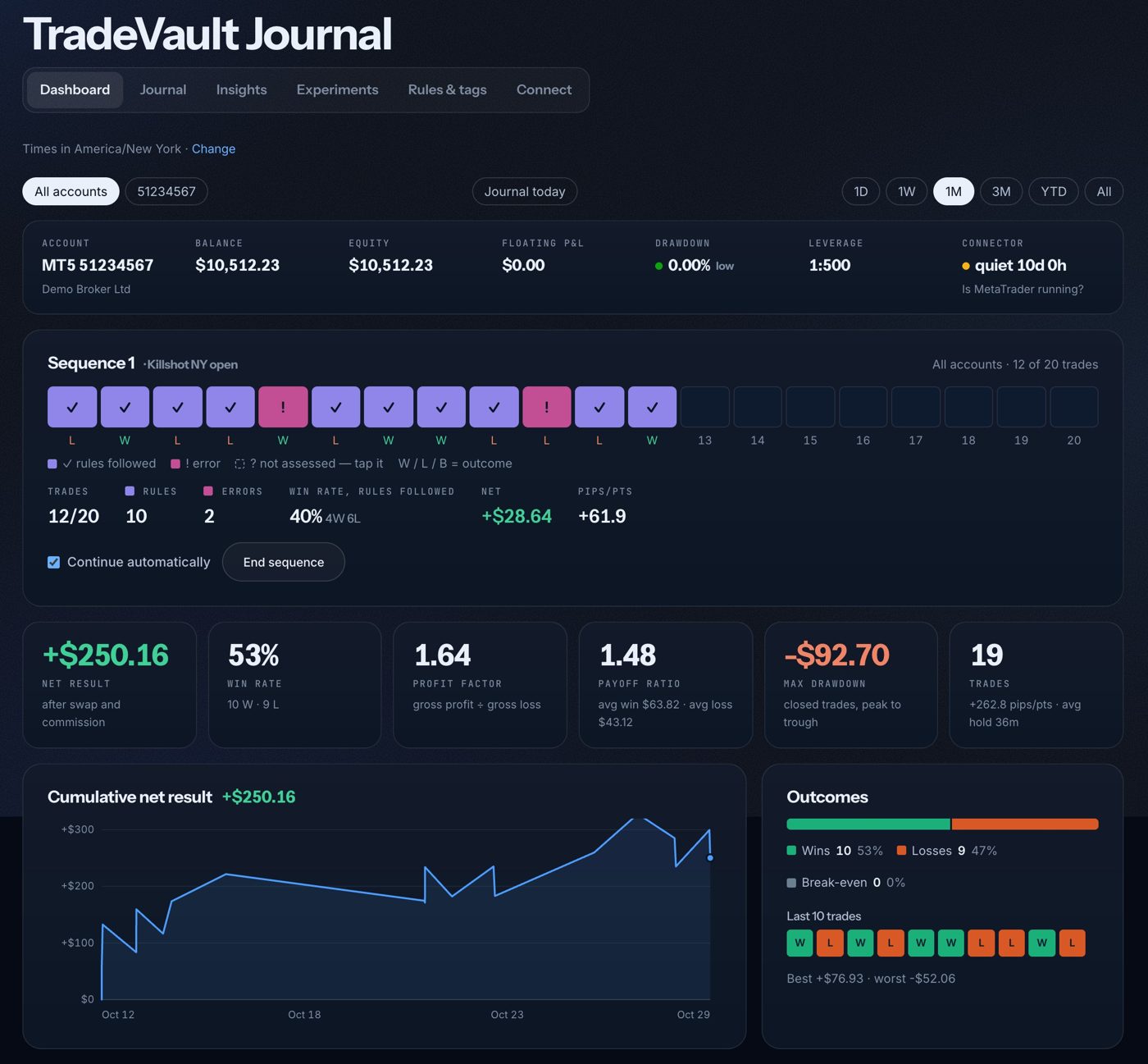
The Trade Vault journal connects to MetaTrader 5, logs every trade automatically and tracks whether you followed your rules, not just your P&L. It works out your win rate, profit factor and drawdown for you, and shows your rule-following streak trade by trade.
Frequently asked questions
What should a trading journal include?
At minimum: date, market, setup, entry, stop, target, size, result and whether you followed your rules. A screenshot and a note on your mindset make the review far more useful.
Is a spreadsheet good enough for a trading journal?
Yes, as long as you fill it in for every trade. Automated journals that connect to your platform save time and remove the temptation to skip the losers.
How often should I review my trading journal?
Glance at it daily and do a proper review once a week. Change one thing at a time so you can tell what made the difference.
What is profit factor?
Gross profit divided by gross loss. A profit factor of 1.5 means you made $1.50 for every $1 you lost.